Healing Isn't Just a Solo Project: Why Individual Therapy Is Only Part of the Picture
Fort Collins, CO | Individual Therapy, Relational Healing, Mental Health Support
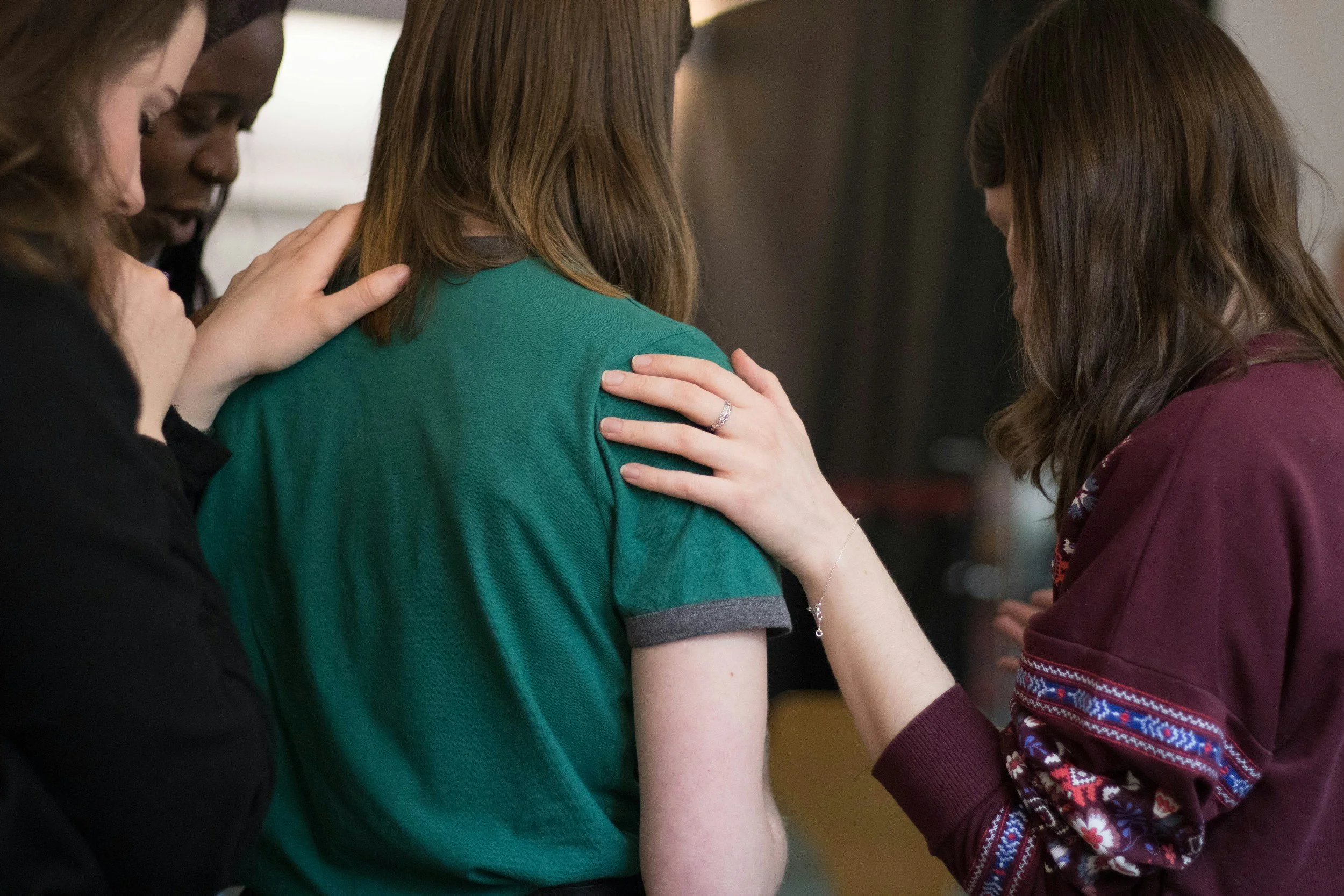
Individual therapy is valuable. And it's only one piece of the puzzle.
I say this not to discourage anyone from seeking one-on-one support. I offer it, I believe in it, and I've seen it genuinely help people make meaning, get curious about themselves, and start to loosen some of the knots they've been carrying for years. But I also think we do folks a disservice when we present individual therapy as the path to healing and growth. Because for a lot of people, especially those whose deepest pain lives in relationship, in systemic harm, in the ways the world has made them feel small or wrong or like too much, individual therapy alone can only go so far.
And I've lived that. Which is part of why I feel strongly enough to write this.
When We're Hurting, We're Often Told to Go Inward
There's a dominant cultural story about healing that goes something like this: something is wrong, you go to therapy, you figure it out, you get better. It's tidy. It puts the work and responsibility squarely on the individual.
And look, I understand why that narrative is appealing. It offers a sense of agency. If healing is something I can do on my own, in a private room with a trained professional, then I'm not dependent on anyone. I'm not asking too much. I'm handling it.
But here's what I've noticed, both personally and in my work: that story can quietly become another way we isolate ourselves in our pain. Another way we internalize problems that were never entirely ours to begin with.
A lot of what brings people into therapy — anxiety, shame, difficulty trusting people, perfectionism, people-pleasing, feeling perpetually unseen — has roots that are relational and often systemic. These patterns didn't develop in a vacuum. They developed in families, in classrooms, in workplaces, in a culture that has very specific ideas about who gets to take up space and who doesn't. Healing them fully often requires more than one person in a quiet office unpacking your childhood.
What Individual Therapy Is Actually Good For
I don't want to throw individual therapy under the bus — that's genuinely not the point here. One-on-one work has real strengths. It's a container that's just for you. There's no one else's needs to navigate, no group dynamics to manage. That can feel like a relief, especially if you're someone who has spent a lifetime managing others.
Individual therapy can be a powerful space to:
Slow down and actually hear yourself think
Start to understand the patterns you keep repeating and where they came from
Develop language for experiences that have felt murky or unspeakable
Build a sense of your own values, needs, and internal landscape
Process experiences that need a witness — grief, trauma, transition, confusion
Practice being honest with at least one person (which is more than many of us get)
When I sit with someone, I'm not trying to fix them or direct them toward a particular version of themselves. I'm genuinely curious about who they are and what they're carrying. I want to help them get more curious about themselves too — not in a detached, intellectualized way, but in a way that's embodied and real. I want us to be able to co-regulate together, to build a kind of relational trust that might feel unfamiliar if trust has been a fraught thing.
That's meaningful work. I believe in it.
But If the Wound Is Relational, We Can Only Go So Far Alone
Here's what I've come to understand, both from my own experience and from being in this field: if the core wound is relational, there's a ceiling on how much healing can happen in individual therapy alone.
You can understand, intellectually, that you developed anxious attachment because your caregivers were inconsistent. You can trace the lineage of your perfectionism back through generations of your family. You can get really clear on your patterns. And all of that is genuinely useful.
But understanding a relational wound and healing it are different things. Healing it — really in the body, in the nervous system, in the way you actually show up in your relationships — often requires being in relationship. With more than one person. In a space where the relational dynamics themselves can be seen, named, and worked with in real time.
That's something individual therapy structurally can't offer. Not because individual therapists aren't skilled, but because it's a dyad. There's one relationship in the room. And while that relationship can be healing in its own right, it's limited in what it can mirror back.
The Fuller Ecosystem of Healing
So what does a more complete picture look like? Honestly, it's different for everyone. But here are some things I think are worth naming as real options — not as last resorts, not as things you do when therapy "isn't working," but as legitimate, powerful paths in their own right:
Couples or relationship therapy. If relational pain shows up most acutely in your intimate partnerships (and for many of us it does) working directly in that relationship can shift things that years of individual work couldn't touch. I say this from personal experience, and I mean it.
Group therapy or depth-focused relational groups. There is something that happens when you're witnessed and challenged and held by multiple people in a contained space that is genuinely different from a one-on-one dynamic. Group work can be uncomfortable in exactly the right ways. It brings your relational patterns into the room in real time, which means they can actually be worked with.
Peer support and community. Therapy isn't the only place healing happens. Sometimes it happens in a living room with people who've been through something similar. In a community garden. In a faith community that actually holds you. In chosen family. We've over-medicalized and over-professionalized healing in ways that sometimes obscure how much of it happens between ordinary people in ordinary moments.
Rest, creativity, movement, time in nature. These aren't alternatives to therapy so much as fundamental conditions for healing. The nervous system needs more than talk.
Systemic and collective work. Some of what we're carrying isn't ours to heal individually at all. It's the weight of systems — racism, economic precarity, ableism, patriarchy — that cause real harm. Organizing, advocacy, and solidarity aren't separate from healing; they're part of it.
What I Actually Offer, and What I Don't
I work with folks in Fort Collins in person and virtually across Colorado, and I want to be honest about what I am and what I'm not. I'm not a fixer. I'm not the expert on your life. I'm someone who will sit with you with genuine curiosity, help you know yourself better, share resources when they're useful, and work alongside you — not above you.
I think of myself as more of an equal in this than the traditional therapy model tends to allow. I have training and tools, yes. But you have the map of your own interior, and I have enormous respect for that.
If individual work feels like the right starting place for you right now, I'm here for it. And if at some point it starts to feel like you've hit a ceiling, I'd encourage you to trust that instinct rather than push through it. Sometimes the ceiling is real. Sometimes it's a sign to add something — a group, a couples therapist, a community — rather than dig harder alone.
Healing doesn't always go in a straight line inward. Sometimes it opens outward.
I offer individual therapy in Fort Collins and virtually throughout Colorado. If you're curious about what working together might look like, feel free to reach out. No pressure, no sales pitch — just a conversation.
Tags: individual therapy Fort Collins, therapist Fort Collins CO, relational healing, mental health support Fort Collins, couples therapy, group therapy, liberation-focused therapy, holistic mental health
